
Residential Treatment
Live on campus while doing the deeper clinical work — therapy, group, family sessions, and skills practice in a calmer environment than home.
What residential is
Residential is the level of care where the deeper work happens. Detox is about getting safe; inpatient is about stabilizing. Residential is where clients have enough room — and enough time away from daily triggers — to actually look at what's underneath.
Who it's for
- Clients who've completed detox and inpatient and need a structured environment to continue clinical work
- People for whom going home is medically safe but environmentally risky — work stress, family stress, easy access to substances
- Clients with significant trauma, grief, or co-occurring mental health concerns that benefit from sustained, daily therapeutic contact
- Anyone who needs a structured environment away from daily triggers
What residential includes
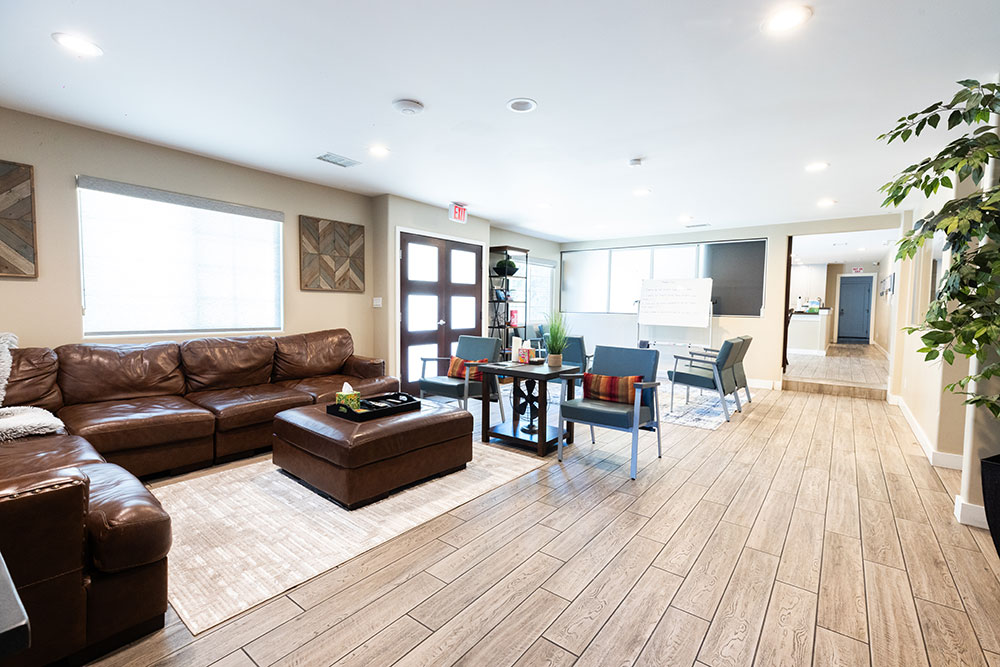
- Living on campus — your own bed, shared common spaces, structured day, peer community
- Multiple individual therapy sessions per week with a primary clinician
- Daily group programming — CBT, DBT skills, process groups, psychoeducation, trauma-informed work
- Family therapy and family program participation when appropriate
- Psychiatric care and medication management
- Recreational therapy, exercise, mindfulness, time outdoors
- Aftercare planning that starts early, not the week before discharge
How long people stay
Residential typically runs 30, 60, or 90 days, but the right length is clinical, not preset. We adjust based on progress, insurance authorization, and what the team is seeing. Longer stays correlate with better long-term outcomes — especially for clients with complex histories — and we'll advocate for the time that's clinically indicated.
What progress looks like
Most clients describe a sequence: getting your sleep and appetite back, then your sense of humor, then the ability to talk about hard things without shutting down, then — usually somewhere in week three or four — a real shift in how you see what happened and why. Recovery isn't linear, but those markers are common.
What comes next
Discharge planning begins early so clients and families leave with a clear aftercare plan and referrals appropriate to their next step. We start that planning early so the handoff is real — not just a printed list of phone numbers.
Insurance and cost
We work with most major commercial insurance plans. Benefits are verified before admission. Call admissions to start that conversation.
Talk to admissions
(866) 514-7282 — confidential, no pressure.